
My baby has a flat spot on their head. Is that normal?
You are doing everything right. Tummy time, feeds, cuddles, bath time. And somewhere in the middle of all of it you notice that your baby almost always turns their head to the same side. Or maybe your GP or someone at mother's group mentioned that the back of your baby's head looks a little flat. Maybe you have already tried turning them to the other side and it’s not working because they just keeping turning their head back 3 seconds later. Here is what you actually need to know…
What are we talking about?
There are two conditions that often go hand in hand in babies with a flat spot, and it helps to understand both.
Torticollis is a tightness or shortening in the neck muscle on one side, called the sternocleidomastoid. It causes a baby to prefer turning their head one way & tilt their head to the side. It can develop in the womb, during birth, or in the early weeks of life. Some babies are diagnosed clearly and early but others are just described as having a "preference" that nobody quite takes seriously enough.
Plagiocephaly is the term for a flat spot on a baby's head, usually on one side at the back. Some babies have flatness across the back of their head, and this is called Brachycephaly. It develops because babies spend a lot of time on their backs, which is absolutely the right and safe thing to do for sleep. When a baby also has a head turning preference, they tend to rest on the same spot repeatedly, and that is when flattening can develop quickly.
These two conditions are closely linked. Torticollis often drives plagiocephaly. Treating one without addressing the other is where a lot of families get stuck.
How common is this?
Very! Torticollis affects somewhere between 4 and 16% of babies in the first months of life, and babies with plagiocephaly the stats are up to 20 to 46%. You are not alone in this waiting room. Not even close.
The most important thing you hold onto, is that it is not your fault. Most babies have this head preference from the get-go and it can be unavoidable.
Will it fix itself?
Sometimes. But the window for easy treatment is narrow and it closes faster than most parents are told.
The first 4 months of life are when a baby's skull is most malleable and most responsive to repositioning and physiotherapy. After six months, the skull begins to harden and treatment becomes more complex & the options narrow significantly.
This is not about scaring you. It is about being honest with you so you can make an informed decision rather than waiting and wondering.
Research shows that when physio starts:
Before 1 month old: 98.6% of babies have a good outcome & treatment lasts around 6 weeks.
Between 1-3 months old: 89% have a good outcome & treatment lasts around 6 months.
Between 3-6 months old: 62% have a good outcome & treatment lasts around 7 months.
After 6 months old: 19% have a good outcome & treatment lasts around 10 months.
Early intervention matters. Earlier physio input means shorter duration of treatment, better outcomes and lower risk of needing more invasive options such as helmets.
What does a physiotherapy assessment actually look like?
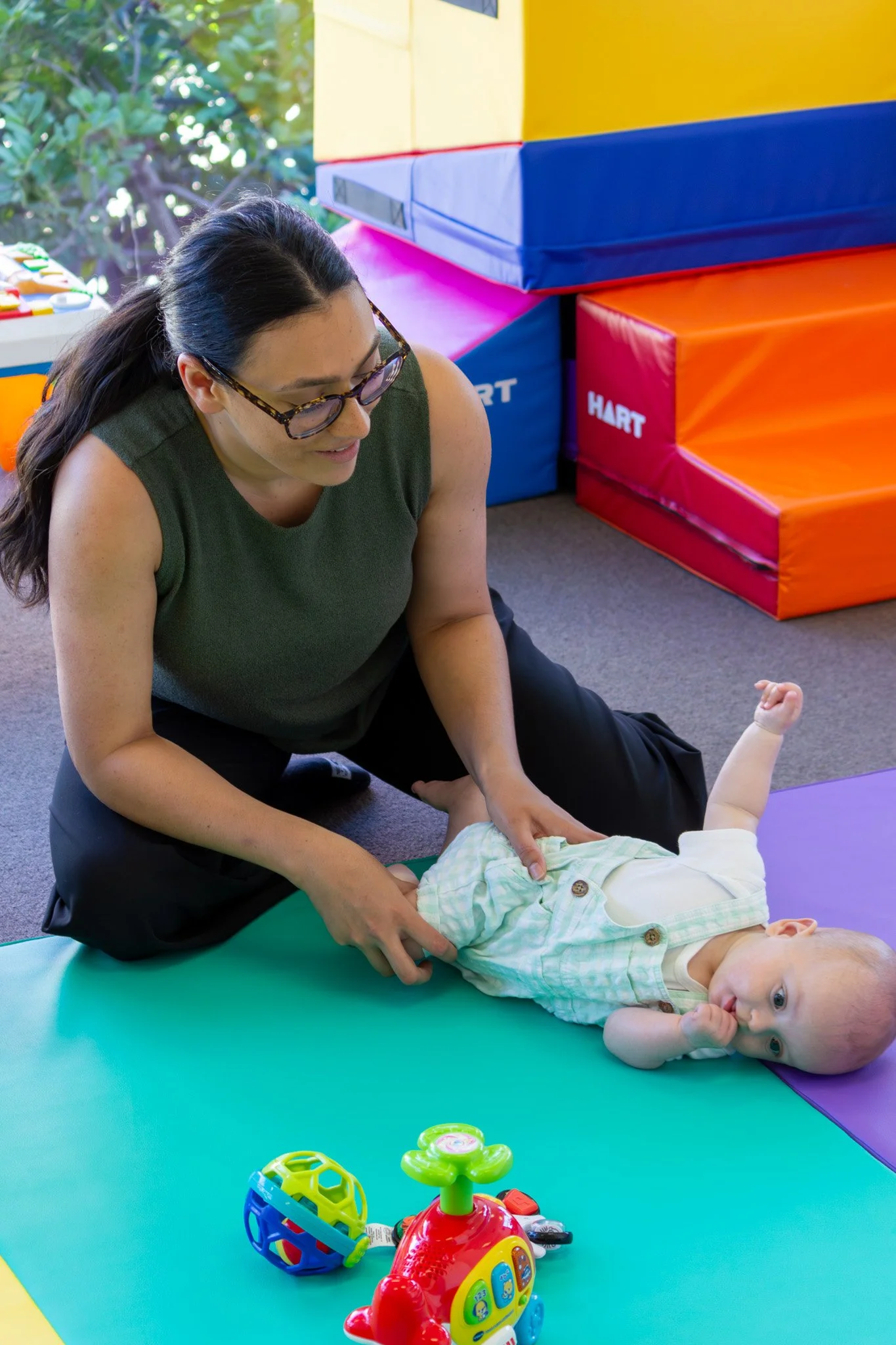
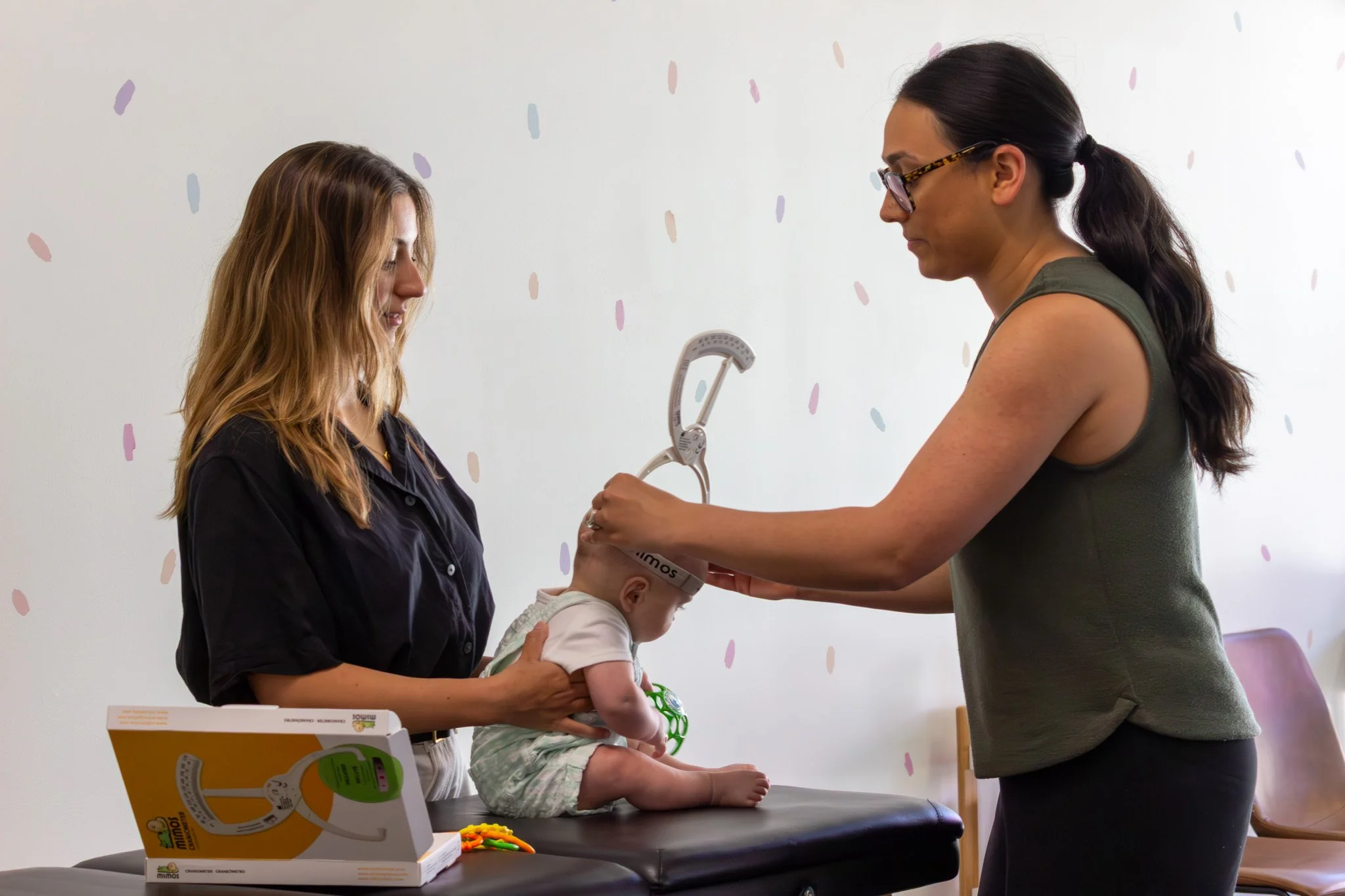
We look at how your baby moves their head in both directions and measure the range of motion in their neck. We assess the shape of their head, the symmetry of their face and ears and use our craniometers to take measurements that track improvement. We observe how they hold themselves during tummy time and when they are upright. We watch how they feed, how they play, and how they respond to movement.
From there we build a picture of what is driving the preference and how significant it is. Treatment for torticollis and plagiocephaly at Jacaranda Kids typically includes:
Gentle hands-on stretching techniques that we teach you to do safely at home
Repositioning strategies that you can weave into your daily routine including sleep, play, feeding, and carrying
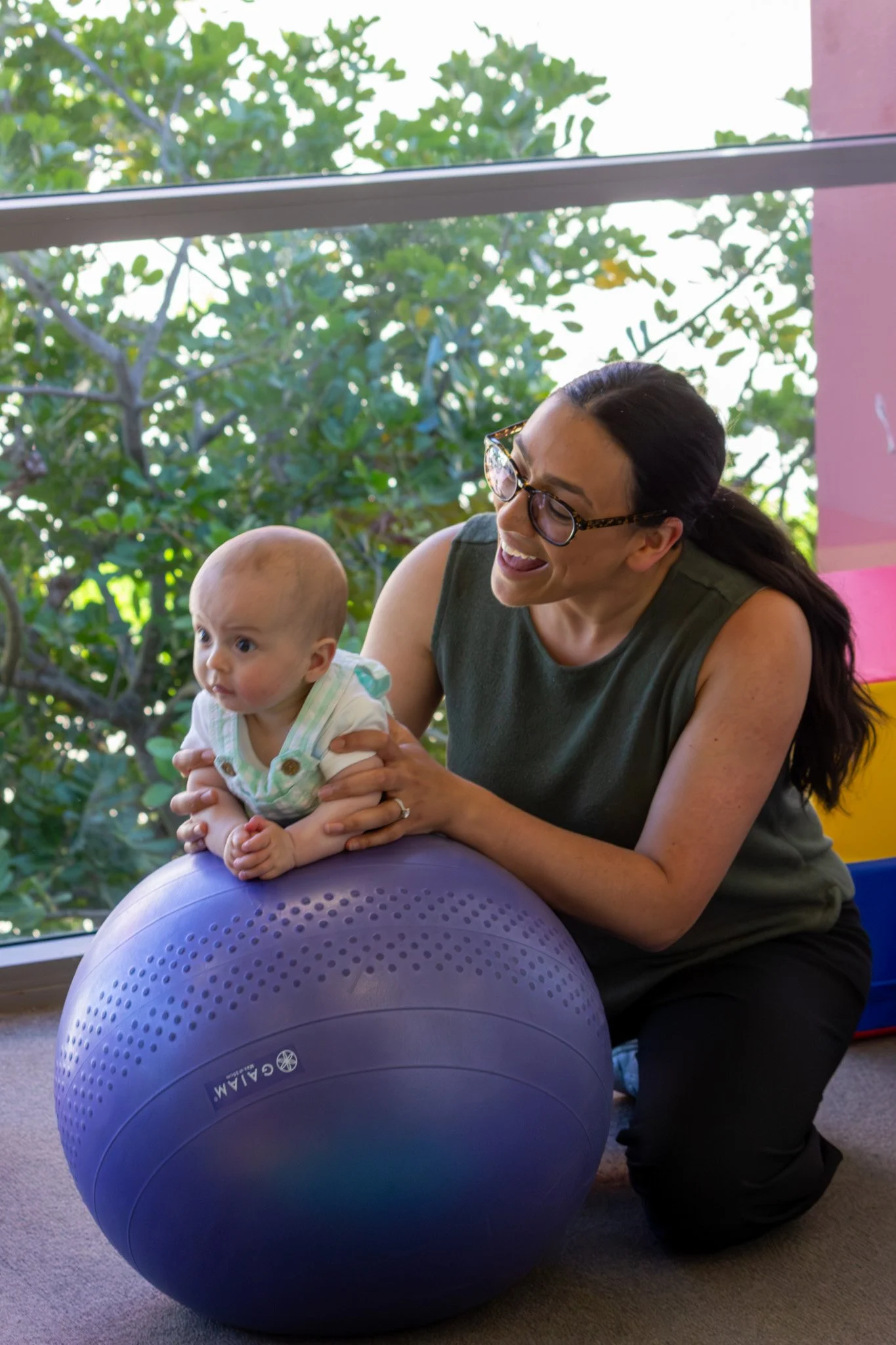
Tummy time progressions tailored to where your baby is developmentally
Specific play positions that helps your baby meet their motor milestones like rolling or sitting
Environmental modifications like where you place toys and how you position the cot
Helmet therapy referral if the head shape requires it, with honest guidance on whether your baby actually needs one
The home program is everything here. Babies change fast and the work you do between appointments is what drives the outcome. We make sure you leave knowing exactly what to do and feeling confident doing it.
What about helmets and other options?
Helmet therapy comes up a lot and it causes a lot of anxiety for parents. Here is the straightforward version. Most babies with plagiocephaly do not need a helmet. Repositioning and physiotherapy resolve the majority of cases when started early.
For families who want additional support between appointments, we recommend The Perfect Noggin, an evidence-based contoured sleep surface developed by paediatric craniofacial surgeon Dr Gary Rogers. This product is SIDS safe and meets Red Nose Sleep Safe Sleep Guidelines. It works by cradling your baby's head in a contoured surface that distributes pressure more evenly across the skull during sleep. Rather than allowing the flat spot to bear the full weight of your baby's head night after night, the contour gently redirects that pressure so the head can round out naturally over time. You can only use this for sleeps before your child is rolling but most families see visible results within 4 to 6 weeks of consistent use.
If your baby may benefit from helmet therapy, your physiotherapist will discuss the options with you and help arrange a referral to an appropriate provider. We work with local services, including the team at Zortex in Norwest, to help families access further support when needed.
It is important to understand that whilst helmets & the Perfect Noggin can help with the flat spot, they don’t address any neck tightness, weakness or any motor impairments. The combination of physio and these tools is where you get the best and fastest outcomes.
When should I book?
As soon as you have a concern. Not when it gets worse. Not after the next maternal health check. Now.
The earlier we see your baby, the more options we have and the faster they respond. If you have been told to wait and see and something still does not sit right with you, that feeling is valid. A single assessment will tell you exactly what is going on and give you a clear plan. You do not need a referral. You just need to call.
At Jacaranda Kids Physio, we see babies from the first weeks of life and flat head and torticollis presentations are some of our most common and most rewarding to treat. Our team will call you before your first appointment to make sure we understand exactly what you have noticed and what you need.
Expert physio. Empowered kids. Supported families.